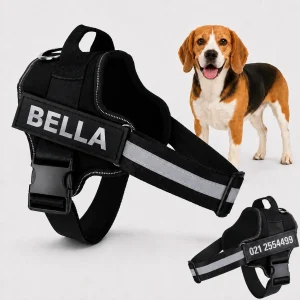
 Custom Dog Harness with Name & Phone Number – Black Reflective Medium 51–67cm Chest
$64.99 NZD

Adjustable dog harnesses for everyday walks, hiking approaches and outdoor trips. This reflective black no pull range covers sizes XS to XXL, with a rear lead ring, top control handle and fit guidance for New Zealand dogs.
Custom Dog Harness with Name & Phone Number – Black Reflective Medium 51–67cm Chest
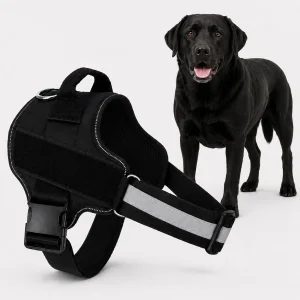 Extra Large No Pull Dog Harness – Black Reflective Adjustable, Size XL
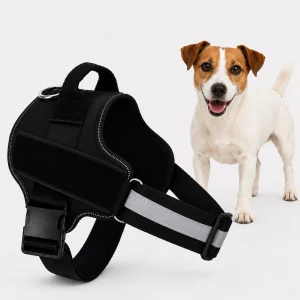 Dog Harness for Small Dogs – Black Reflective No Pull Harness, Size S
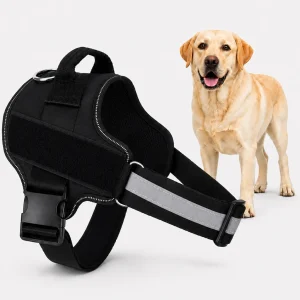 No Pull Dog Harness for NZ Dogs – Black Reflective Adjustable, Size L, 66–90 cm Chest
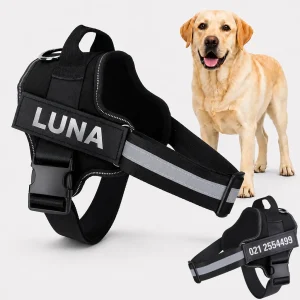 Dog Harness with Name & Phone Number – Black Reflective Size L 66–90 cm Chest
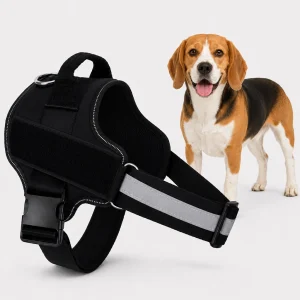 Dog Harness Anti Pull – Black Reflective Adjustable Medium Size
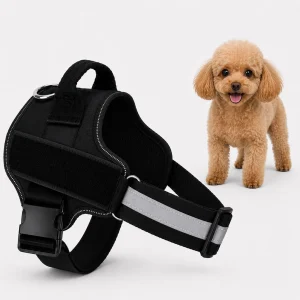 Extra Small Dog Harness – Black Reflective No Pull Harness, Size XS
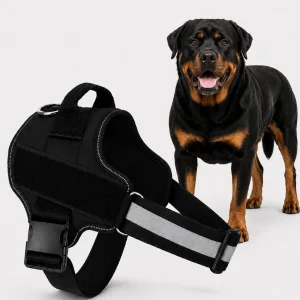 No Pull Dog Harness for NZ Dogs – Black Reflective Adjustable XXL
A correctly fitted harness should sit securely without rubbing, slipping or restricting your dog’s front legs. Always select the size using chest and neck measurements rather than relying only on breed or weight.
The breed suggestions below provide a useful starting point. However, dogs within the same breed can have very different builds, coat thicknesses and proportions.
| Size | Chest | Neck | Guide Weight | NZ Breed Examples |
|---|---|---|---|---|
| XS | 39–47 cm | 30–38 cm | 3–7 kg | Toy Poodle, small Maltese, Chihuahua and small terrier types |
| S | 45–58 cm | 36–47 cm | 6–12 kg | Jack Russell, Shih Tzu, Bichon Frise and Miniature Schnauzer |
| M | 51–67 cm | 47–64 cm | 11–24 kg | Staffy, Beagle, Cocker Spaniel, Whippet and smaller Border Collie |
| L | 66–90 cm | 50–68 cm | 23–38 kg | Labrador, Huntaway, Golden Retriever, German Shepherd and large Border Collie or Heading Dog |
| XL | 71–97 cm | 56–77 cm | 28–43 kg | Large Labrador, large Huntaway, Golden Retriever, Boxer, German Shepherd and Rottweiler |
| XXL | 75–101 cm | 61–85 cm | 40–60 kg | Large Rottweiler, Mastiff cross, very large Huntaway and large Shepherd types |
Important: Breed and weight are approximate guides only. Your dog’s chest and neck measurements should fit within the stated range for the selected size.
If your dog sits near the limit between two sizes, consider its body shape and coat thickness. Never choose a smaller size when the chest or neck exceeds the maximum measurement.
Once adjusted, you should generally be able to slide two fingers beneath the straps. The harness should remain centred when your dog walks, turns or changes direction.
Check that the straps do not rub behind the front legs. You should also confirm that your dog can walk and sit naturally before attaching the lead for a longer outing.
This range spreads lead pressure across the chest rather than concentrating it around the neck. The top handle also provides a closer control point near roads, gates, vehicles, livestock and other dogs.
However, a no pull harness cannot guarantee that a dog will stop pulling. Consistent lead handling and suitable training remain important, particularly for strong, young or excitable dogs.
These dog harnesses are suited to daily walks, hiking approaches, farm visits, hunting trips and outdoor travel. Reflective trim can improve visibility during darker winter mornings, evening walks and roadside use.
Check the adjustment before every trip, especially after washing the harness or using it on rough ground. Always confirm local dog access rules before entering walking tracks, conservation areas, beaches or farmland.