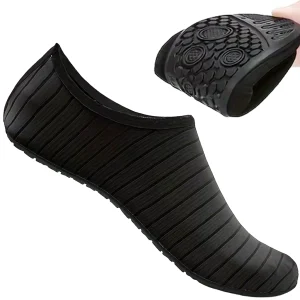
 Water Shoes EU Size 42-44 with Grippy Rubber Sole for Hiking Stream Crossings 26.5cm Long
$19.99 NZD

Lightweight water shoes for beaches, shallow stream crossings, kayaking, boating and use around campsites or huts. Their flexible mesh uppers and textured TPR soles provide a close, easy-to-pack design for activities where regular footwear may become wet. Choose from unisex EU sizes 36–47 using the detailed fitting guide below.
Water Shoes EU Size 42-44 with Grippy Rubber Sole for Hiking Stream Crossings 26.5cm Long
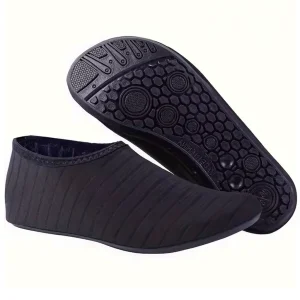 Aqua Shoes EU Size 46-47 with Grippy Rubber Sole for Hiking Stream Crossings 28.5cm Long
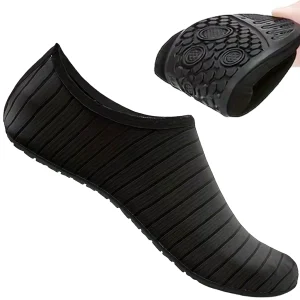 Aqua Shoes EU Size 40-41 with Grippy Rubber Sole for Hiking Stream Crossings 25.5cm Long
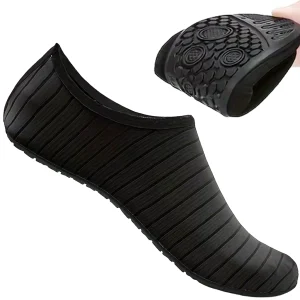 Aqua Shoes EU Size 38-39 with Grippy Rubber Sole for Hiking Stream Crossings 24.5cm Long
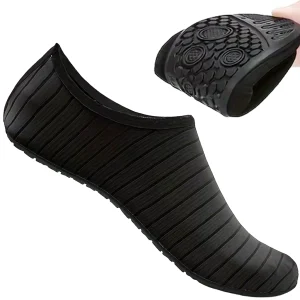 Water Shoes EU Size 44-45 with Grippy Rubber Sole for Hiking Stream Crossings 27.5cm Long
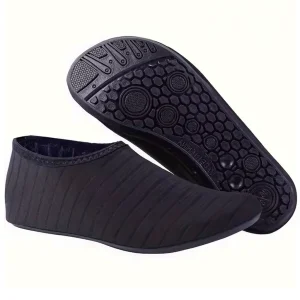 Water Shoes EU Size 36-37 with Grippy Rubber Sole for Hiking Stream Crossings 23.5cm Long
These lightweight water shoes provide a practical layer between your feet and sand, small stones, wet ground and suitable rocky surfaces. The flexible uppers create a close, sock-like fit, while the textured TPR soles provide more protection than walking barefoot.
They are compact enough to carry as secondary footwear during a tramp, camping trip or day at the beach. Moreover, their slip-on design makes them easy to change into before a suitable shallow stream crossing, a walk around a campsite or an activity beside the water.
These are not waterproof shoes. Water can enter through the breathable upper, allowing the footwear to be used in wet environments without trapping as much water as conventional closed footwear.
These shoes use unisex EU sizing. Measure both feet while standing and select your size using the longer foot.
| EU Size | Approximate Foot Length | Approximate Weight per Pair |
|---|---|---|
| 36–37 | 23.5 cm | 145 g |
| 38–39 | 24.5 cm | 155 g |
| 40–41 | 25.5 cm | 175 g |
| 42–43 | 26.5 cm | 186 g |
| 44–45 | 27.5 cm | 201 g |
| 46–47 | 28.5 cm | 215 g |
Measure while standing because your feet may spread slightly under your body weight. If your measurement falls between two sizes, choose the larger option.
These shoes have a contoured front that provides the greatest length around the big-toe side.
If your big toe is shorter than your second toe, or your first few toes are similar in length, choose the next size up. The larger size provides additional room around the front and outer side of the toe area.
For example, if your foot measures approximately 25.5 cm but your second toe is longer than your big toe, choose EU size 42–43 rather than EU size 40–41.
You should also consider choosing the next size up when:
When your feet differ in length or width, select the size that best accommodates the larger foot. All measurements and weights are approximate.
This flexible footwear may suit a range of short-duration wet and waterside activities, including:
Although the textured soles provide additional grip, no footwear can prevent every slip. Take particular care on algae, mud, loose stones and smooth wet rocks.
Water footwear does not make an unsafe river or stream safe to cross. Before entering the water, check the depth, current, riverbed and available exit points. Do not cross when the water is fast, murky, carrying debris or making loud noises from moving rocks.
For detailed New Zealand advice, read the NZ Mountain Safety Council river safety guidance. If in doubt, stay out.
No. They are designed to be worn in wet conditions, so water can enter through the upper. The lightweight materials then allow the shoes to dry more readily after use.
It should feel close and secure without placing uncomfortable pressure on your toes. A loose pair may move around your feet, while a pair that is too small may press against your longest toes.
Choose the next size up when your feet are wide, your toes spread noticeably or your foot length is close to the maximum measurement for a size.
Choose the next size up when your second toe extends beyond your big toe. The front of the shoe is contoured around the big-toe side, so the larger option provides more space for other toe shapes.
No. They are lightweight secondary footwear for suitable wet environments and short periods of use. Wear supportive hiking shoes or boots for normal tracks, extended walking and rough terrain.
The current unisex range covers EU sizes 36–47, with approximate recommended foot lengths from 23.5 cm to 28.5 cm.